

Below is a recap of the essential regulatory updates for contact compliance professionals for March.
This is a marketing blog and is not intended, nor should it be interpreted, as legal advice. Please seek legal counsel for full interpretations of all rules and laws outlined in this blog.
FCC’s Onshoring Call Center NPRM: March 26 Vote Looms
The Federal Communications Commission (FCC) circulated a draft NPRM on March 5, “Improving Customer Service and Consumer Protection,” set for vote at the March 26 Open Meeting, targeting offshore call centers used by carriers, VoIP, cable, and satellite providers.
See FCC Chairman Brendan Carr’s statement here.
Draft NPRM proposes:
- “American Standard English” proficiency testing for offshore agents (vocabulary/idioms; e.g., Occupational English Test; bilingual Spanish optional)
- Offshore volume caps (~30% of interactions; separate inbound/outbound; exemptions TBD)
- Mandatory “handled abroad” disclosures at start (scripts/timing/automated; country ID possible)
- U.S. transfer rights on request (no extra wait/drops vs. direct U.S. routing)
- Ban offshore sensitive data handling (SSN, CC#, passwords, MFA, CPNI)
- FCC reporting (offshore volumes, transfers, proficiency results, wait times)
- Foreign robocall deterrents (gateway bonds up to $100K; tariff duties)
Legal opinions note that the FCC’s proposed restrictions could trigger “substantial operational changes, vendor shifts, and cost hikes” for communications providers, citing AT&T CPNI breaches and scam‑training links. Industry sources likewise forecast a reshoring wave, arguing that “the proposed FCC rulemaking could push companies to reshore call center jobs.”
Outbound Contact Compliance Stakes:
- Vendor blocks, TCPA disclosure suits
- STIR/SHAKEN/traceback failures from foreign routes
- Expansion risk: Chat/text/email next?
How Gryphon AI Can Help
Gryphon AI delivers a fully U.S.-hosted compliance platform that eliminates offshore risk while enforcing real-time adherence to FCC, TCPA, and data-handling requirements. With RND Safe Harbor protections and audit-ready logs, organizations can confidently manage outreach and meet evolving reporting and disclosure mandates.
NYC Finalizes SHIELD Rule: Sweeping Debt Collection Overhaul
New York City’s Department of Consumer and Worker Protection (DCWP) finalized the Stopping Harassment and Intimidation and Ensuring Lawful Debt Collection (SHIELD) Rule on February 26, 2026, effective September 1, 2026, expanding oversight to original creditors alongside third-party collectors and debt buyers.
Key Provisions
- Covers Original Creditors: Applies once creditors stop periodic statements, accelerate debt, or threaten legal action- triggering “debt collection procedures
- Communication Caps: Limits collectors to 3 attempts/week (calls/texts/emails) across channels for each account, which is stricter than FDCPA
- Any-Time Disputes: Consumers dispute via any channel; collectors cease collection until 60-day verification (original docs/charge-off statements)- default judgment insufficient
- Unverified Debt Notice: Failure to verify bars resumption; flags account for future collectors
- Medical Debt Rules: No credit reporting pre-application; disclose financial aid policies; verify related accounts within 3 months
- Validation Notices: Include NYC license, itemization date, local rights- mailed within 5 days of initial contact
- Recordkeeping: 6-year logs of disputes, complaints, time-barred policies
Implications
The rule applies specifically to NYC consumers and, while it does not create a private right of action, it introduces heightened enforcement risk from DCWP, placing new compliance burdens on original creditors beyond existing FDCPA and Regulation F requirements.
How Gryphon AI Can Help
Gryphon AI enables NYC-ready compliance by providing RND certification, audit-proof recordkeeping, and real-time tracking of cross-channel communication limits and consent—helping organizations stay within strict SHIELD Rule requirements and avoid enforcement risk.
Fifth Circuit TCPA Ruling: Verbal Consent Victory or Compliance Nightmare?
The Fifth Circuit Court of Appeals’ decision in Bradford v. Sovereign Pest Control (February 25, 2026) marks a significant shift in TCPA interpretation. The court ruled that oral consent is sufficient for telemarketing calls using prerecorded voices, eliminating the need for written proof in Texas, Louisiana, and Mississippi. Overturning the FCC’s 2013 requirement for “prior express written consent,” the ruling returns to the TCPA’s statutory language under 47 U.S.C. § 227(b)(1)(A), which allows “prior express consent” through either oral or written means.
Venue plays a critical role in outcomes: Plaintiffs’ attorneys strategically file cases in districts where the plaintiff’s residence or the event location aligns with favorable circuits. In the Fifth Circuit (TX, LA, MS), oral consent now defeats written only challenges, but cases filed in the 9th or 11th Circuits may still demand written documentation. This forum shopping creates unpredictable compliance demands.
Practical compliance challenges remain: Documenting verbal consent requires robust evidence like recordings, detailed call logs, or corroborating witnesses- evidence that’s often disputed years later in litigation. Demonstrating “clear, affirmative, and unequivocal” oral consent remains a prime target for TCPA class actions. Additionally, more than 20 states, including Texas, mandate written consent for telemarketing activities. Companies operating nationwide must navigate this fragmented regulatory landscape.
Key Impacts for Contact Compliance Strategies:
- Increased litigation vulnerability: Reliance on verbal claims heightens TCPA lawsuit risks, with potential damages of $500 to $1,500 per call
- Operational complexity: Multi-jurisdictional campaigns require consent-type segmentation by circuit and state
- Escalating audit and proof burdens: Verifying verbal consent manually does not scale effectively
Gryphon AI’s Recommendation
Maintain a conservative approach by prioritizing written consent. Our platform automates the capture of timestamped, fully auditable digital consent records across all channels, providing ironclad proof while reducing litigation exposure. While verbal consent offers a legal pathway in the Fifth Circuit, it poses substantial practical risks elsewhere- written consent remains the reliable standard.
Proposed TRUMP AMERICA AI Act: What It Could Mean for Your Outreach
Quick Facts
- Introduced: December 2025 (initial); updated March 17, 2026
- Sponsor: Sen. Marsha Blackburn (R-TN)
- Status: Discussion draft only– no formal bill filed, no committee action as of March 20, 2026
- Next Steps: Watch Senate Commerce Committee markup after March recess
- Official Title: “The Republic Unifying Meritocratic Performance Advancing Machine intelligence by Eliminating Regulatory Interstate Chaos Across American Industry Act”
This federal AI proposal codifies President Trump’s Executive Order 14179 to create a unified federal AI framework that preempts conflicting state laws and aims to create one national rulebook that would override state laws.
Key focuses include child safety (e.g., Kids Online Safety Act integration), creator rights (NO FAKES Act), bias audits, transparency, and a “duty of care” for AI developers enforced by the FTC. In theory, this federal proposal could simplify compliance by replacing 50 state patchwork rules– but brings new federal limits on how AI chatbots engage customers during outbound campaigns.
Why It Could Matter for Contact Campaigns
Gryphon AI certification enables compliant reach under TCPA/TSR. This Act adds federal AI-specific rules that could impact your outreach if not addressed:
AI Chatbots (texts/IVR handoffs)
(When an automated phone menu system (Interactive Voice Response, or IVR) transfers a caller to an AI chatbot for further interaction.)
- Developers must prevent “foreseeable harms” – think deceptive offers or bad nudges in AI conversations
- FTC will set mandatory safeguards; expect disclosure rules like “This is an AI, not a human”
- Risk: Fines if your chatbot scripts fail federal “reasonable care” test
Personalized Marketing Limits:
- Platforms must disclose when algorithms personalize content and offer “unfiltered” (non-personalized) views
- Risk: Retargeting based on AI chat data could trigger transparency violations (if personalization source is not disclosed or unfiltered option unavailable)
Liability Shift:
- Companies deploying AI + developers are both liable for harms
- Overrides state rules but adds federal tort claims
- Risk: Class actions if AI “nudges” customers into bad decisions
Good News! Preemption: Federal uniformity could eliminate state-by-state AI disclosure headaches.
Next steps: Audit chatbot scripts now for clear AI labeling and data silos. Gryphon AI will track federal movement and provide updates as they become available.
RND Hits 6.2B Queries in 2025, Database Tops 600M Disconnected Numbers
The 2025 Reassigned Numbers Database (RND) Annual Report from SomosGov confirms explosive adoption of this critical TCPA safe harbor tool, with total queries doubling year-over-year to 6.22 billion and the database of disconnected telephone numbers surpassing 600 million by year-end. Peak monthly usage hit a record 719 million queries in December 2025, while service providers reported an average of 28 million permanent disconnects each month.
Key 2025 Metrics for Compliance Teams
- Queries: 6,220,122,084 total (vs. 3.37 billion in 2024); 314 million “YES” responses confirmed numbers reassigned since consent date
- Database growth: 600,517,158 total disconnected TNs (up from 505 million end-2024); average 7.3 million added monthly
- Adoption: Active callers grew to 715 by December; service providers averaged 1,084 monthly reporters
Industry Impact
The report notes immediate 25-30% list reduction for companies certifying against RND, with over 637 million wrong-party calls/texts avoided industry-wide since 2021 launch. Legal and compliance experts now call RND “essential to compliance programs” as TCPA class actions continue climbing. Gryphon AI’s analytics platform integrates real-time RND lookup with consent verification and channel optimization to deliver FCC safe harbor plus litigation-grade audit trails.
Bottom Line
With RND now the FCC’s sole designated safe harbor database and query volumes doubling annually, 2026 compliance strategies must prioritize automated RND Certification at scale. Contact Gryphon AI to audit your current reassigned numbers exposure.
Source: 2025 RND Administration Annual Report, SomosGov, Inc.
Michigan Advances Robust Mini-TCPA: Senate Passage Signals Real Progress After Years of Stalled Efforts
Originally highlighted in Gryphon AI’s Regulatory Report: November 2025, Michigan’s Senate Bill 351 (S-4)- an expansion of the Telephone Solicitation Act- passed the state Senate unanimously on January 30, 2026 (36-0 vote). This marks the first significant legislative progress on a “mini-TCPA” after multiple failed attempts since 2022. The bill now moves to the House for consideration before reaching the Governor.
Long-Awaited Momentum
Unlike earlier proposals that stalled in committee, this version cleared the Senate with amendments intact, demonstrating strong bipartisan support for enhanced consumer protections against unwanted calls and texts. Industry groups like the Ecommerce Innovation Alliance (EIA) call it a flawed bill that could spur litigation against legitimate businesses.
Senate Bill 351 is tie-barred to Senate Bills 352 through 355, all of which are tie-barred to Senate Bill 351. The Senate Fiscal Agency provided an in-depth bill analysis on all here.
Keep an eye on this bill because it just might become a reality soon.
Core Requirements
The legislation establishes comprehensive rules for telemarketing communications:
- Broad Coverage: Applies to calls and texts urging purchases, data sharing, job offers, prizes, liability avoidance claims, or fraud warnings- excludes communications with written consent, existing customers (absent opt-out), and business-to-business contacts
- Mandatory Disclosures: Live calls must identify caller name and organization; text messages require sender identification
- Omnichannel Reach: Covers live calls and texts for solicitation leads across channels
- EVA Standard (Express Verbal Authorization): Requires express written agreement for phone number authorizations on live calls
Enforcement Structure:
- Attorney General civil penalties up to $25,000 per violation
- Private right of action offering $1,000 per violation (increased from $250) or actual damages plus attorney fees
- Enhanced penalties of $50,000-$100,000 for targeting seniors (age 75+), disabled individuals, or numbers flagged in the national Do Not Call registry
Practical Compliance Considerations
Michigan area code holders are presumed residents (rebuttable). Political communications stay exempt. The rules align with rising complaints about aggressive telemarketing.
The Gryphon AI Platform Readiness enables real-time compliance and positions clients ahead of the game.
TransUnion’s 2026 ThirdParty Collections Study: 4 Takeaways for Outbound Compliance
TransUnion’s latest report on thirdparty collections reveals mounting pressure on outbound strategies. Here’s what matters for contact compliance:
- AI Adoption at Scale: 52% of large agencies now use AI for communications optimization, but 16% of third-party firms deploy it for channel selection (calls vs. text). The catch? Compliance gaps persist as AI picks numbers without TCPA/FDCPA certification.
- Communication Channel Shift: Text messaging up 28% YoY for collections, but complaint rates are 3x higher than voice. Agencies report 41% of consumers prefer digital, yet regulatory scrutiny on consent has doubled since Reg F.
- RightParty Contact (RPC) Challenges: Average RPC rate fell to 62% (down from 68% in 2024), with mobile number accuracy dropping to 71%.
- RND integration cited as the #1 fix by 73% of agencies, but only 44% use it consistently.
- Compliance Investment Boom: 78% of agencies increased tech spend on scrubbing, analytics, and suppression - up from 52% last year. FDCPA litigation remains the top risk, with text based class actions surging 35%.
This report shows why real-time RND Certification, channel-specific consent tracking, and AI-driven RPC optimization are now essential basics. Regulators are ramping up scrutiny on SMS compliance in text-based collections. Gryphon AI is here to help.
FCC CallBlocking 603+ Deadline: March 25 Compliance Reminder
As published previously in the Regulatory Round Up: Q2 2025, Voice Service Providers and terminating carriers should treat March 25, 2026 as the hard compliance deadline for the FCC’s 8th Call Blocking Order, even though the underlying rule is formally effective March 24, 2026.
What must be in place by March 25
- SIP 603+ (or ISUP 21) for analytics based blocking: All terminating carriers using analytics based call blocking- whether via inhouse systems or third-party services must respond with SIP code 603+ (or ISUP code 21 on non IP networks) to indicate an analytics blocked call. Legacy SIP codes for analytics based blocking may no longer be used
- Standardized redress and documentation: The FCC’s call blocking redress framework now fully applies, including requirements to provide clear redress information to customers and maintain documentation of blocking and unblocking decisions
Action items for providers
- Confirm that all vendor and in-house platforms are sending SIP 603+ (or ISUP 21) for analytics blocked calls, not generic 607 or other obsolete codes
- Validate that customer facing materials and IVR/optout paths reflect the new redress requirements and timelines
- Perform a final production test between March 18–24 to ensure code usage and redress flows are consistent end-to-end before the March 25 cutoff
With the FCC signaling that enforcement will follow the March deadline closely, March 25 serves as a practical “cliff” by which providers should assume full compliance and be prepared to demonstrate implementation to the Commission and industry partners.
FCC Cuts Off Belthrough LLC, Fines Yonder Media Mobile for Illegal Robocalls
The Federal Communication Commission (FCC) Enforcement Bureau issued orders on March 12, 2026, cutting off Belthrough LLC from the U.S. phone network and settling with Yonder Media Mobile Inc. ($60,000 fine) for robocall violations- escalating crackdowns on unauthorized traffic.
Belthrough LLC Shutdown
- A Final Determination Order confirmed Belthrough originated/transmitted illegal robocalls; all U.S. providers must block its traffic
- Trigger: Cease-and-desist letter Sept 10, 2025, after detected violations
- Impact: Effective prohibition from network access- no mitigation plan filed
Yonder Media Mobile Settlement
- Consent Decree: Settled for $60,000 voluntary contribution to Treasury and a robust compliance plan
- Violations: Provided international services without Section 214 authorization
- Resolution: Ends investigation; mandates future adherence
Broader Context
The FCC keeps cracking down on robocalls using the Robocall Mitigation Database (RMD). Non-compliant providers get blocked, and those without mitigation plans are also shut out. Blocking these RMD-listed entities doesn’t just hurt the blocked companies- it creates strain on the providers now required to block them to stay compliant and avoid their own violations.
Gryphon AI is your real-time compliance partner– we’re here to help.
April 2026 Holiday Telephone Solicitation Bans
Please be aware of the following U.S. holiday telephone solicitation bans for the month of April 2026:
- On Friday, April 3, 2026, the states of Lousiana and Pennsylvania prohibit unsolicited sales and marketing calls in observance of Good Friday.
- On Friday, April 24, 2026, the state of Nebraska* prohibits unsolicited sales and marketing calls (for prerecorded messages only), in observance of Arbor Day.
- On Monday, April 27, 2026, the state of Alabama prohibits unsolicited sales and marketing calls in observance of Confederate Memorial Day.
Other holidays may be proclaimed by the Governor in each state throughout the year.
*Nebraska does not prohibit calls on Sundays or legal holidays; however, it does restrict the use of prerecorded messages to 1 pm to 9 pm on these days (subject to certain exceptions).
Please be aware of the following Canadian holiday telephone solicitation bans for the month of April 2026:
- On Friday, April 3, 2026, all Canadian provinces and territories prohibit unsolicited sales and marketing calls in observance of Good Friday.
Gryphon AI has updated its existing service parameters to reflect these solicitation bans. Please contact us with any questions at 866-366-6822.
NY State of Emergency Issued through April 24, 2026
Consistent with prior communications, Executive Orders declaring disaster emergencies in the State of New York trigger telemarketing restrictions under the Nuisance Call Act.
The Nuisance Call Act makes it unlawful for any telemarketer to make unsolicited telemarketing sales calls to areas of the state under an emergency declaration.
Executive Order 52.7 declaring a State Disaster Emergency in the State of New York arising from concerns due to Federal Actions related to vaccine access, has been issued effective through April 19, 2026.
Executive Order 58 related to a nor’easter expected to cause hazardous conditions posing imminent danger to public transportation, utility service, public health, and public safety systems throughout multiple counties, remains effective through March 24, 2026.
Executive Order 47.16 declaring a State Disaster Emergency in the State of New York arising from an illegal and unlawful strike by correction officers, remains effective through April 24, 2026.
Gryphon AI has extended State of Emergency blocks for New York to April 24, 2026, to ensure compliance with the above Executive Orders.
Contact the Gryphon AI Helpdesk with any questions at 866-366-6822.
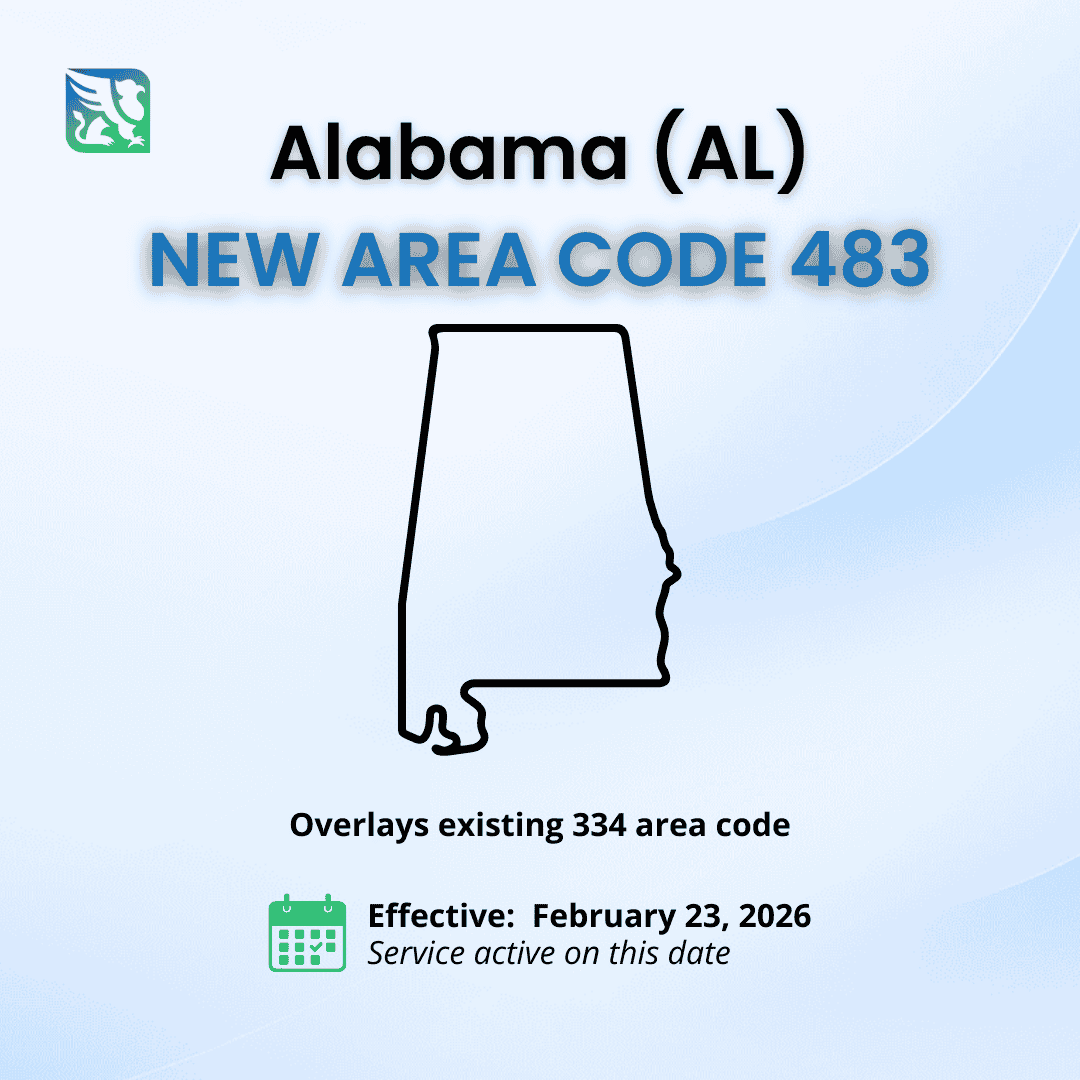
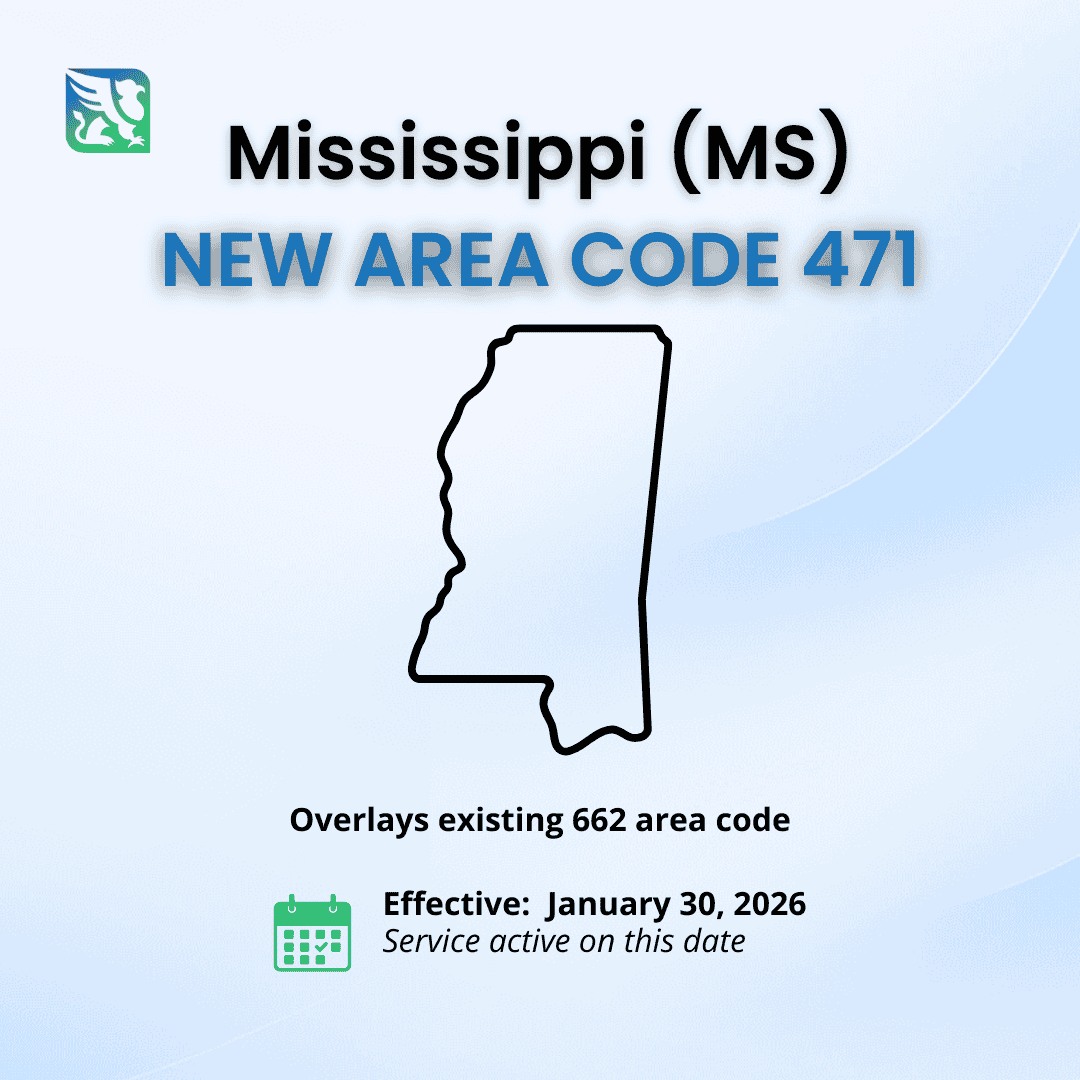
New Area Codes
About Gryphon AI
Staying updated with the latest regulatory changes is crucial for any enterprise aiming to minimize risk and maximize reach. Gryphon AI is the only automatic, real-time, intelligent contact compliance solution on the market that delivers compliant, real-time intelligence into every customer conversation.
With Gryphon AI, enterprises can stay ahead of the regulatory curve and efficiently manage all regulatory changes, ensuring seamless compliance and operational excellence.
To learn more about how Gryphon AI can help you manage these updates, reach out to us today.